

Who’s Running Your Networking?
Pitch? Please!
The newsletter for people who are done networking the hard way
Issue 03 · Foundations · Week 3 of 52
A NOTE FROM ME
Can I share something a little vulnerable?
There was a period in my life, very recently in the past year or so, when I would leave networking events feeling absolutely hollowed out — not tired the way you get after a good workout (not like I really know what that feels like lately), but depleted in a way that took days to recover from.
Being an extrovert, I felt so betrayed by my own self! I’m supposed to be the life of the party! The epic wingwoman to support those way shyer than me to feel comfortable to show up.
But I was backfiring- hearing subconscious messages that I’m not enough. I thought I just wasn't built for it… My magnetism wasn’t working to build my own business but I was lighting people up for others. (yesssss…. My classic deflector moves you have seen at every meeting!)
So I stopped showing up. I just disappeared. I only showed up to the one group I facilitated and even then I was only showing up half heartedly.
And I’m only just now beginning to step back out into the networking scene.
The irony is- I wasn’t paying attention then that my nervous system was doing exactly what it was designed to do. It was protecting me in a way I didn’t realize I needed protecting. ( and truthfully, I needed less protection than I realized!) Once I understood that, everything started to shift.
Sincerely and with Gratitude
Jenny
THIS WEEK'S TOPIC
Your nervous system is running your networking
Here's something very few will tell you at a networking event: the reason you sometimes freeze up, go blank, over-talk, or want to disappear has very little to do with your personality and almost everything to do with your physiology.
Your autonomic nervous system — the part of you that runs below conscious thought — is constantly scanning every room you enter for signals of safety or threat. It's doing this whether you want it to or not. And in professional social settings, it often picks up signals that send it into protection mode.
When your nervous system feels unsafe, you have three options:
fight (over-talk, dominate, perform),
flight (leave early, hide near the food), or
freeze (go blank, feel invisible, lose your words).
And then there’s fawn, which is my go to: I deflect and keep the focus on whomever I’m talking to and never share about myself. If you have come to the gatherings- you have witnessed and lovingly called me out on it.
Sound familiar? Which do you identify with?
This is where we start with a little bit of Grace.
None of these states are character flaws.
They're ancient survival responses showing up in modern professional contexts.
The person who dominates every conversation isn't necessarily arrogant — they may be anxious.
The person who leaves early isn't necessarily unfriendly — they may be overwhelmed.
The person who goes silent when asked what they do isn't unprepared — they may be frozen.
And me? I’m just too busy thinking I’m not enough and my offer isn’t valuable to think that maybe you think that I AM perfect and my offer IS exactly what your network has been looking for.
HeartMath research, and others, ( here is a SUPER long article about it if you are into reading scientific data! ) have shown that the heart sends more signals to the brain than the brain sends to the heart — which means that what happens in your body shapes what happens in your mind, not just the other way around. When your heart rhythm is erratic from stress, your thinking narrows because its focus is on safety and survival. When it's smooth and coherent, your access to creativity, warmth, and social ease expands because you are in a state of thriving not surviving.
If you read back to last week's edition, my pregig routine creates a coherent rhythm within my being so when it’s show time, I’m at ease. When I walk into an event that I myself am not hosting- I tend forget about the pregig routine that I could do to feel more at ease within myself before walking in the door and I feel awkward, self conscious and clumsy.
You can't always think your way into connection. You have to feel your way there first.
THIS WEEK'S PRACTICE
Learn your nervous system pattern
Go get your journal! This week, start noticing which response is your default in social or professional situations. No judgment — just data gathering.
• Fight pattern: Do you talk more than usual? Do you find yourself steering conversations back to your work? Do you feel a need to establish credibility quickly?
• Flight pattern: Do you look for exits early? Do you feel relief when an event ends? Do you sometimes cancel at the last minute?
• Freeze pattern: Do you go blank when asked about yourself? Do you feel like you disappear in group settings? Do you leave events feeling like you didn't show up as yourself?
Once you know your pattern, you can start to work with it — instead of being run by it. We'll come back to this all year.
Journal prompt: Which pattern do I recognize most in myself? When did I first learn to respond this way?
MEMBER SPOTLIGHT
Meet Kimberly Higney, owner of Cardea Women’s Natural Health ( listen to the recording for the FULL responses from her interview!)
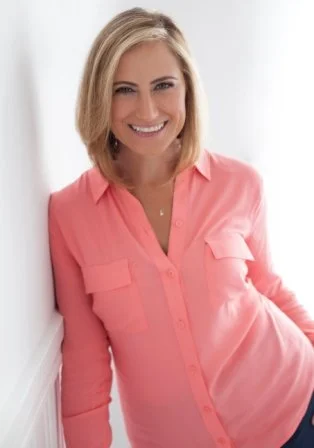
Meet Dr. Kimberly Higney
I’m Dr. Kimberly Higney, I own Cardea Women’s Natural Health on the Seacoast of New Hampshire, and going on almost 19 years, and in health care for almost 30 years.
There are 3 areas in which I love to work with mostly women, but also with men and they are:
Chronic Illness such as thyroid, digestive disorders, joint concerns.
Hormonal imbalances, not replacement, like around thyroid, adrenals and life transitions like menopause from a different perspective. I love working in this area when it affects energy, libido and relationship dynamics,
The third area i work in the area of when individuals recieved a scary diagnosis. There’s opportunity to understand the underlying cause in an empowering place of meaningful adaptations once needed to get through life’s challenges rather than how things have gone wrong.
Together we work to help understand your body’s language to resolve, reset and renormalize to help you feel like you again.
That may involve hormone testing from the perspective of what your body is trying to do to shift your hormones, not what is wrong and broken. I do hair mineral and facial skin analysis which is unique to our practice here on the Seacoast. All a part of our diagnostic process in office and with colleagues outside the office. Once we understand what some of your underlying concerns are, we may work with things like brainspotting which is a neuroreassociative approach or therapeutic nutrition, or occasionally herbs and flower essences and have national and international colleagues to call upon.
What lights me up is when there is a shift I can perceive someone is moving from a frustrated or scared place feeling powerless to feeling more trust in their body and a sense of capability, resilience and self assuredness.
Outside of work I am an archer, I was at one point fairly recently, the number 2 female archer in NH. I love East Coast Swing Music and have danced to Jenny’s band and highly recommend! So many things to be grateful for: travel adventures, walking barefoot in the park, swimming, being outside coffee with friends.
Coming to pitch please was having a sense that Jenny, through her welcoming and inviting way, would create a warm and inviting environment where we could really truly get to know each other. And I feel that’s what’s happened- it’s a warm and intimate environment.
How do you manage networking anxiety — what's helped you most?
There are 2 things for me, the first is if I’m noticing anxiety or discomfort in going into a situation with new people i want to look at it and examine it. IF I’M feeling anxious really it’s’ most often for me that I don’t feel like I need to show up and prove myself in some way. Which really means I don't feel comfortable showing up as just me in my center of who I am, and that means there is a layer of artifice between you and me or anyone I[m going to be in contact with. That prevents me from getting to know the best of you, and it prevents the best of me from shining through too. So if I can just remember to show up as a good human and recognize the other humans that I'm meeting, be interesting in finding the things that light someone up and ask about those things, I think we can connect on a more human level. I like to like someone. I’m more likely to refer to someone I feel a connection with.
There is an audio book by Devorah Zack, and the book was something like “Networking for people/introverts who hate networking” and she had a lot of practical tips on how to show up to an event and if you are a little more introverted how to give yourself space to arrive and have some extra time, feel prepare, stand over by the food to make small talk. An introvert could always use a job at a networking event to connect with people. I love that book and have often read parts of chapters on my way to events, but i think the first part of showing up as a human and getting to know people in your normal, relaxed goodness of yourself is the easiest.
What do you wish more people knew about what you do?
I think there is a misunderstanding that the tools we use are the treatment. I would like to clarify that: your body is the only thing that can heal itself, and the tools we use are supportive. Whether it’s therapeutic nutrition, whole food supplementation, I use a lot of organ meat supplementation, herbs, detox, etc. The tool isn’t the treatment. They are important to implement at the right stage in the right order of healing.
The core of what we do that makes my practice unique, we don’t look at what’s happening through the perspective of pathology or what’s wrong or how you’re a hot mess. We take that judgement off and look at what’s happening underneath: your body’s adapting appropriately to something that happened at some point in time that was a survival threat. We are getting to the root of what that is through looking at symptoms, the body area affected, and how this adaptation is trying to get you through and how to resolve it as quickly as possible.
Adaptation symptoms could reflect an experience of not meeting your needs fast enough, experiencing loss of some kind, feeling separated from someone, uncertainty about your partner or mate in life. SO we reverse engineer these symptoms to help resolve through the use of tools at the right tools to support your body the best.
How can people in the group connect with or support you?
Connect with me on Fridays with a coffee! Connect via email: kimhigney@gmail.com
Cardeaseacoast.com for information to schedule a consultation in person or remotely and to receive our Newsletter.
I will be having an open house later this summer at my new location that I would love to invite you to!
BEFORE YOU GO
Understanding your nervous system patterns is the beginning of genuine agency in any room you enter.
If this week's topic stirred something in you, that's worth sitting with. Feel free to share with me on VOXER or reply to this email to share with me what’s landing!
See you next week. Take good care of yourself in every room you walk into.
— Jenny